How Usage Data Streams Shape Charge Timing Across Access Platforms
Written by Olivia Griffin · Oct 16, 2026
How Usage Data Streams Shape Charge Timing Across Access Platforms
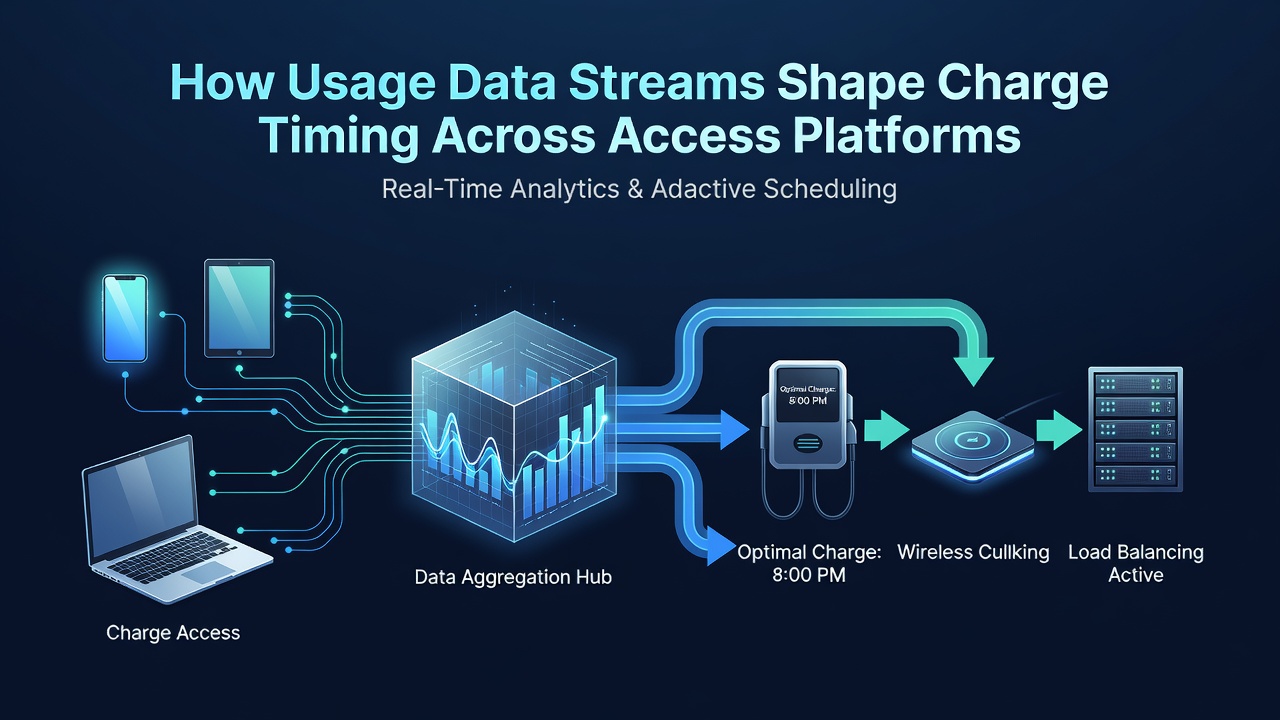
Usage data streams flow continuously from connected devices and applications into centralized billing engines that determine when charges apply across web portals, mobile apps, and embedded IoT interfaces, and observers note that these streams rely on timestamped event records rather than fixed calendar cycles in many modern systems. Researchers at institutions studying digital infrastructure have documented how meter readings arrive in near real time through API endpoints, allowing platforms to calculate consumption increments and trigger charges at the moment usage thresholds cross predefined limits rather than waiting for monthly reconciliation.
Data Collection Mechanisms and Their Role in Timing Decisions
Platforms gather raw usage metrics through sensors and software agents that push packets containing session duration, data volume, or resource allocation figures, while access interfaces on different devices normalize these packets into standardized formats before forwarding them to the core ledger. This normalization step matters because mismatched time zones or clock drifts between edge devices and central servers can shift the exact moment a charge registers, and data from regulatory bodies such as the Federal Communications Commission shows that consistent timestamp protocols reduce such discrepancies in broadband and cloud service environments. Engineers integrate buffering layers that hold incoming streams during peak loads, yet these buffers also delay charge application by milliseconds to seconds depending on queue depth.
Platform-Specific Timing Variations
Web-based dashboards typically process streams in batch windows that align with server-side cron jobs, whereas mobile applications often rely on foreground and background sync events that report usage upon reconnection to networks, and IoT gateways push aggregated payloads at intervals set by firmware constraints. Observers tracking these differences report that mobile platforms introduce additional latency when devices enter low-power states, which in turn postpones the moment a usage event reaches the billing engine and alters the sequence of charge postings. In contrast, desktop access environments maintain persistent connections that stream events without interruption, producing tighter alignment between consumption and charge timing.
Integration with Metering and Threshold Logic
Threshold logic evaluates cumulative data points against tier boundaries, and when a stream pushes a reading that crosses a boundary the system immediately queues a charge event rather than deferring it to the next billing cycle. Studies from European research consortia on digital metering indicate that real-time evaluation reduces overage disputes because customers receive notifications within seconds of threshold breaches, yet the same studies note that this immediacy requires robust error-handling to avoid charging on faulty sensor data. Access platforms therefore embed validation rules that cross-check stream integrity before finalizing timing decisions.
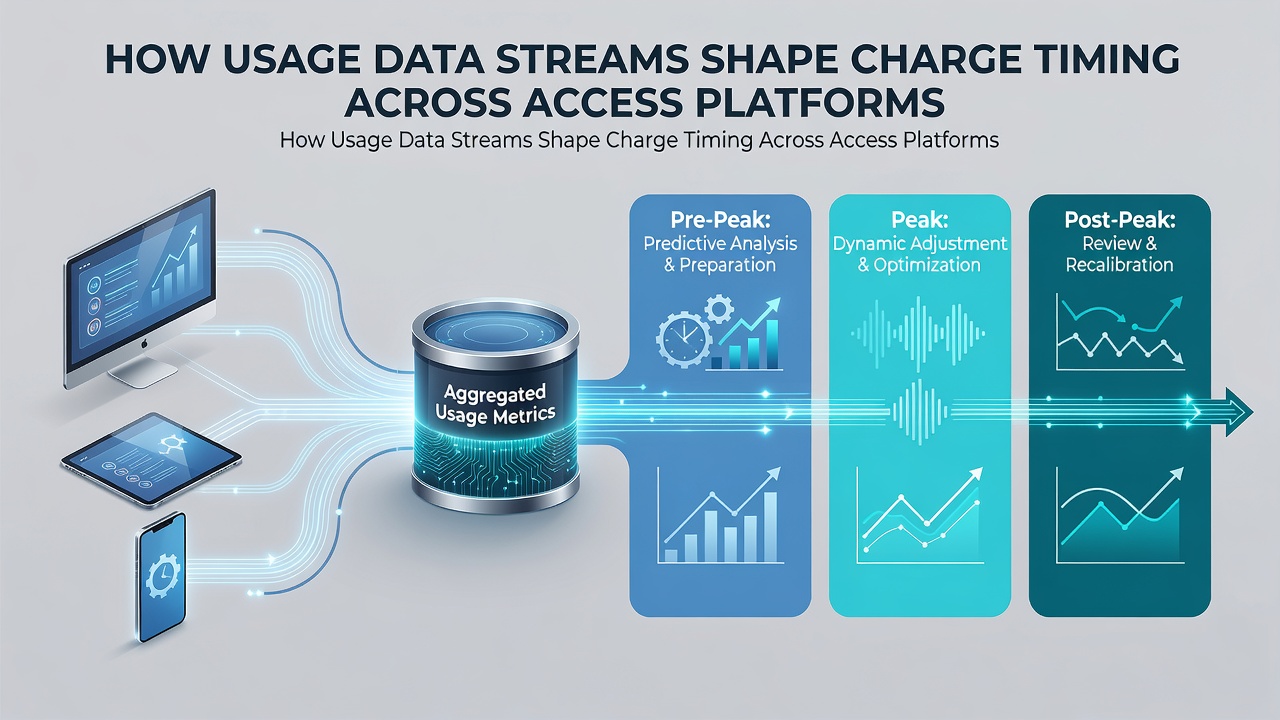
Engineers configure retry mechanisms that reprocess failed stream deliveries, and these retries can advance or postpone charge timing depending on whether the corrected data arrives before or after the original charge window closes. In October 2026 several vendors plan to roll out updated protocols that embed sequence numbers directly in usage packets, a change expected to minimize duplicate charges that currently arise from retransmissions across unreliable mobile networks.
Compliance Considerations Across Regions
Regional rules require platforms to retain usage records for defined periods and to apply charges only after verification steps complete, and authorities in Canada have published guidelines requiring documented audit trails that link each charge event back to the originating data stream. Those requirements force billing systems to store intermediate stream states rather than discarding them after initial processing, which adds storage overhead yet preserves the ability to reconstruct exact timing sequences during disputes. Australian regulatory updates similarly emphasize transparent logging of when usage data arrives versus when charges post, creating a traceable chain that spans multiple access platforms.
Technical Synchronization Challenges
Clock synchronization protocols such as NTP and PTP keep device and server times aligned within milliseconds, yet network partitions still produce temporary drift that affects charge sequencing. When a partition resolves, late-arriving packets may trigger retroactive charges or adjustments, and platform operators therefore maintain separate correction ledgers to record these timing shifts without disrupting ongoing streams. Cross-platform consistency improves when operators adopt common schema standards for usage events, allowing the same stream to feed web, mobile, and embedded interfaces without custom translation layers at each endpoint.
Conclusion
Usage data streams continue to redefine charge timing by replacing fixed schedules with event-driven triggers that respond to consumption in real time across every access platform in use today. The mechanisms that collect, normalize, and validate these streams determine whether charges post instantly or after deliberate buffering, and regional compliance frameworks add further constraints on record retention and auditability. As vendors prepare protocol enhancements scheduled for late 2026, the core relationship between incoming data and resulting charge events remains the central factor shaping billing accuracy in consumption-based models.