Usage Meter Integration and Its Effects on Sequential Charging in Access Models
Written by Amir Washington · Oct 30, 2026
Usage Meter Integration and Its Effects on Sequential Charging in Access Models
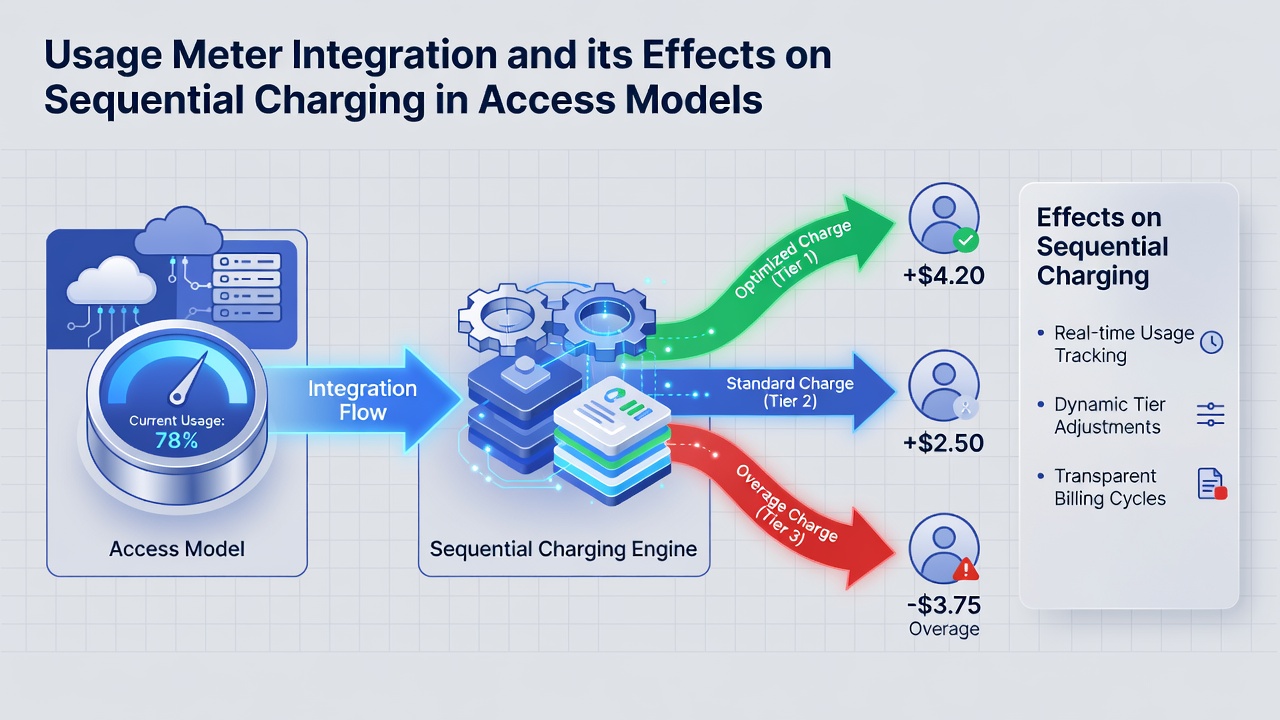
Usage meter integration connects consumption tracking devices directly with billing platforms, which then shapes the order and timing of charges applied in access models where users gain entry based on verified usage levels. Systems record data points from meters in real time, feed those figures into charge calculation engines, and determine whether base fees precede overage amounts or whether tier thresholds trigger additional line items in a specific sequence. Observers note that this setup reduces manual reconciliation steps while aligning recorded consumption with automated revenue recognition across platforms that handle membership or subscription access.
Access models often rely on tiered permissions, and meter data determines when a user crosses from one tier into the next. Integration allows the system to apply charges in sequence: first the access fee for the current period, then incremental usage charges once meter readings exceed predefined thresholds. Research from the OECD indicates that organizations adopting synchronized meter feeds report fewer mismatches between logged consumption and invoiced amounts, particularly in environments where multiple users share pooled resources. Data shows that sequential logic becomes more precise when meters push updates at fixed intervals rather than at month-end batch processes.
How Meter Data Influences Charge Ordering
Sequential charging depends on timestamped meter events to establish priority among charge types. When a meter registers consumption, the integration layer evaluates rules that dictate whether an overage charge posts before or after a renewal fee. Experts have observed that platforms using event-driven architectures process these sequences faster, because each meter reading triggers an immediate evaluation instead of waiting for a nightly job. Figures from industry reports reveal that companies implementing such event streams cut processing delays by measurable margins in consumption-based access environments.
Consider one platform that manages enterprise software access: meter readings for API calls arrive continuously, and the system evaluates remaining quota before applying any additional charge. If the reading crosses a threshold, the charge engine posts an incremental fee immediately after confirming the base access remains active. This ordering prevents duplicate charges and ensures compliance records reflect the exact moment access expanded. Those who manage these systems report that integration points must validate meter authenticity before allowing the sequence to advance, which protects downstream ledger entries from erroneous data.
Technical Components That Shape Sequencing
Integration typically involves three layers: the meter endpoint that captures raw consumption, a normalization service that converts units into billable quantities, and a rules engine that applies charge sequences. The rules engine references access policies stored in a central repository, then decides the order of line items on each invoice. When policies change, the engine updates sequencing logic without requiring code changes in the meter layer. Studies found that this separation allows administrators to test new charge orders in isolated environments before deploying them to production access models.
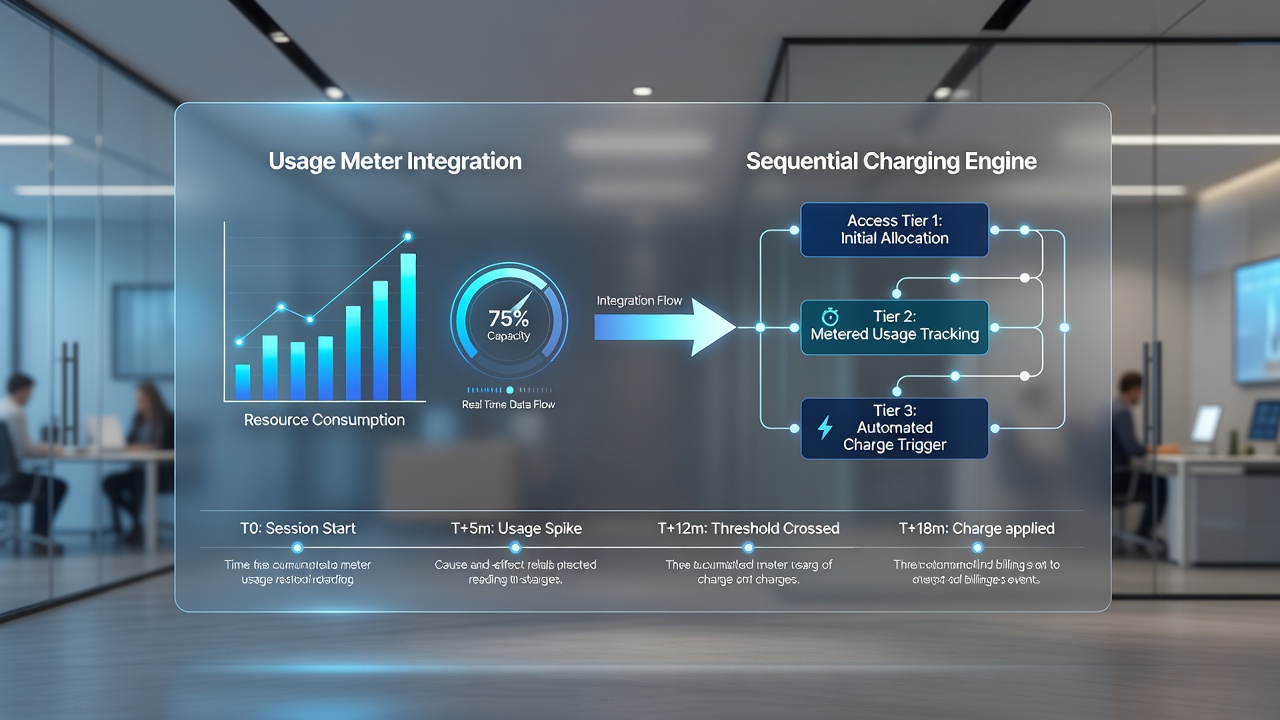
October 2026 marks a notable point for organizations tracking regulatory updates on automated billing transparency, as several jurisdictions began requiring clearer disclosure of how meter readings translate into sequential charges. Platforms that already maintain detailed audit trails between meter events and charge sequences find compliance documentation easier to assemble. According to guidance from the Australian Competition and Consumer Commission, clear mapping of meter timestamps to charge order helps satisfy disclosure rules in recurring service contracts. Data from similar implementations shows reduced support tickets related to disputed usage amounts once this mapping becomes visible to end users through self-service interfaces.
Effects on Revenue Recognition and Access Control
Sequential charging that follows meter integration supports accurate revenue recognition because each charge posts only after the corresponding consumption event receives validation. Access remains gated until the system confirms the charge sequence completed without error. When meter data arrives late, the sequence pauses and access levels stay at the prior tier, which prevents over-delivery of services. Researchers discovered that this pause mechanism reduces revenue leakage in high-volume environments where thousands of access requests occur daily.
One documented case involved a media streaming service that integrated usage meters for concurrent stream counts. The charge sequence applied base subscription fees first, then added concurrent-user overages only after meter data confirmed the spike. This ordering kept revenue reports aligned with actual access grants and limited disputes over peak-period billing. Observers note that the same pattern appears in cloud infrastructure access models where compute-hour meters drive sequential charges after confirming reserved capacity fees.
Integration Challenges and Observed Patterns
Latency between meter reading and charge application can shift sequence timing, especially when networks experience congestion. Systems that buffer meter events before feeding them into the charge engine sometimes post charges out of intended order, which requires reconciliation adjustments. Evidence suggests that adopting message queues with guaranteed delivery reduces these timing issues and restores expected sequence integrity. Platforms handling global access models further segment meter data by region to account for differing tax rules that may affect charge ordering.
Another pattern appears when multiple meters feed a single access account. The integration layer must decide whether to process readings from all meters simultaneously or to prioritize one meter type over another. Organizations that define clear priority rules within the sequencing engine maintain consistent charge order across accounts. Reports from the European Commission on digital service billing highlight the value of documented priority rules when regulators review automated charge sequences.
Conclusion
Usage meter integration directly determines how sequential charging unfolds in access models by supplying the timestamps and quantities that trigger each step in the charge sequence. Organizations that align meter feeds with rules engines achieve more predictable ordering, fewer reconciliation adjustments, and clearer records for compliance purposes. As access models continue to evolve toward finer-grained consumption tracking, the connection between meter data and charge sequencing remains a central operational focus.